


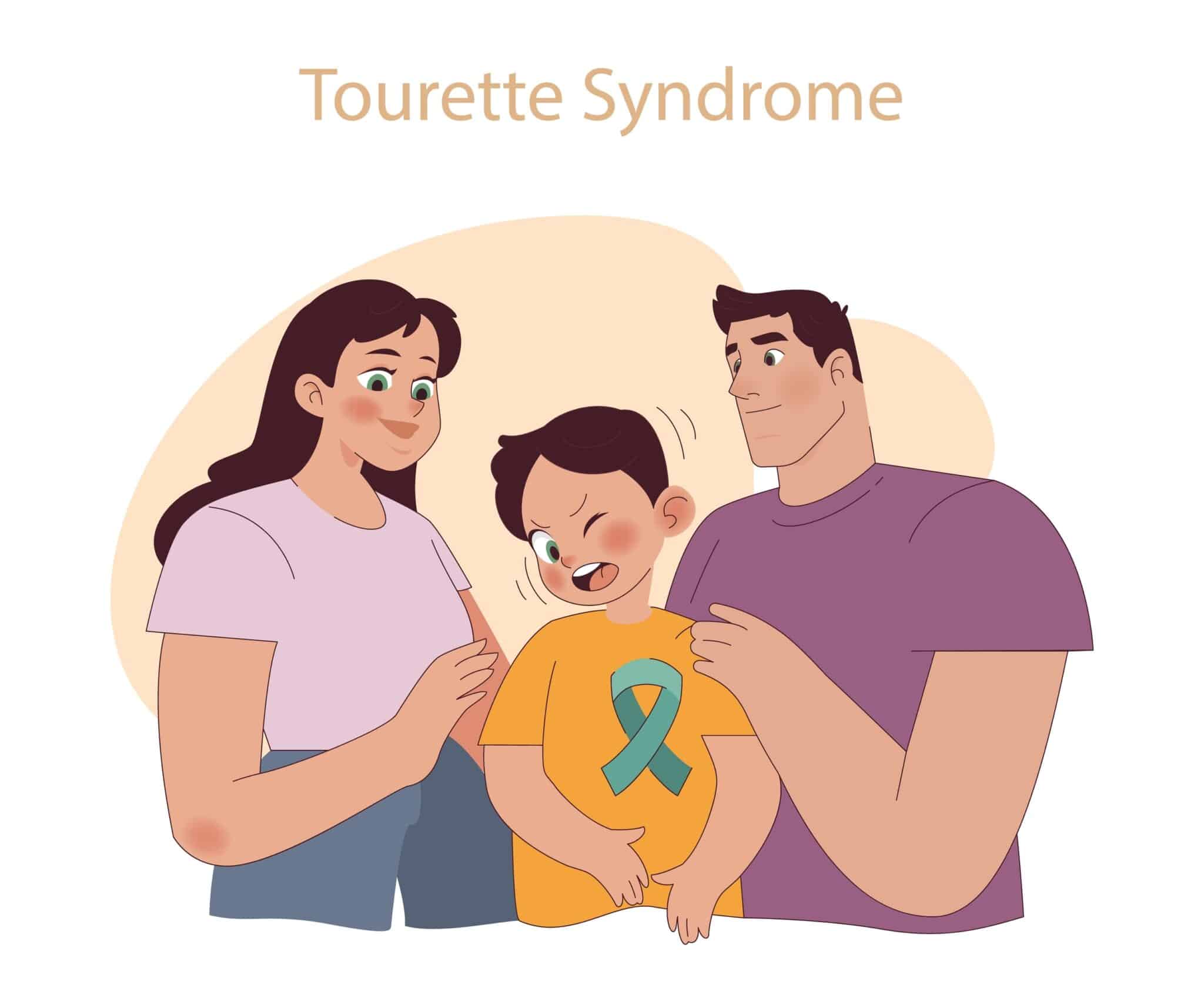
Not every person with Tourette’s syndrome seeks help because the tics themselves are very severe. Often, what proves more burdensome is the tension, shame, avoidance of people, overload at school or work, comments from those around them, or co-occurring difficulties such as anxiety, intrusive thoughts, low mood, or concentration problems. Tics in Tourette’s syndrome are involuntary, can change over time, and usually worsen under the influence of stress or strong emotions.
- The help of a psychologist or psychotherapist does not therefore consist of „learning control at all costs”, but of reducing the burden, better understanding symptoms and regaining greater influence over everyday functioning.

Tourette's syndrome – what is it and when does psychological support make sense?
- Tourette's syndrome belongs to tic disorders and includes both motor and vocal tics. Their severity is usually not constant – it can periodically increase, weaken, change form or appear in waves. In many people, the first symptoms begin in childhood, and in some, tics become less severe in later adolescence and adulthood. However, this does not mean that the issue disappears on its own, because emotional and social difficulties often persist alongside the tics.
- Psychological help makes sense not only when tics are frequent. Sometimes people seek help who suffer most from the tension before leaving the house, the fear of others„ reactions, sensory overload, difficulties in relationships, or living in a constant state of readiness to ”just hold it together somehow".
- A good consultation helps to distinguish what stems mainly from the tics themselves and what from the emotional consequences of living with them.
It is also worth bearing in mind that in people with Tourette syndrome, ADHD, OCD, anxiety, depression and difficulties with emotional regulation often co-occur, and these areas frequently cause greater limitation than the tics themselves. Therefore, support should not focus exclusively on the motor or vocal symptom, but on the person's functioning as a whole.
What does the initial consultation look like?
The first visit is not for judging or checking whether someone „really has Tourette's”. Its aim is to understand the situation. In practice, we talk about what tics appear, how they have changed over time, in which situations they are most troublesome, what happens around them emotionally and socially, and whether additional difficulties appear: tension, intrusive thoughts, low mood, relationship problems, school or professional difficulties.
- In children and adolescents, cooperation with the parent or guardian is also an important element, but without taking away the young person's agency.
- In adults, a consultation often helps make sense of what for years has been treated as „odd habits”, „nervousness” or simply something that had to be hidden.
A well-run meeting helps to name the problem and determine whether psychological support is enough or if Tourette psychotherapy in Gdańsk will be needed, and sometimes also further specialist consultation.
What does Tourette's psychotherapy look like in Gdańsk?
Well-managed therapy helps to reduce tension around symptoms, better understand signals from the body, recognise situations that intensify tics, and regain greater freedom in everyday life.
Depending on needs and the specialist's qualifications, the work may include elements of behaviour therapy used in tic disorders, such as habit reversal training or the CBIT approach. This type of therapy teaches, among other things, greater awareness of tics and the sensations preceding them, recognising situations that exacerbate symptoms, applying a competing response, and better coping with stress. This is not a „miraculous switch-off for tics”, but a method that helps many people reduce their severity or impact on daily functioning.
In parallel, a psychotherapist can work on what is very often just as important as the tics themselves: social anxiety, avoidance, anger towards one's own body, family tension, the feeling of being misunderstood, overload at school or work, and a drop in self-esteem. That is precisely why psychotherapeutic support for Tourette's is not limited to the symptom, but addresses overall quality of life.
What difficulties do we help with at the MECAL Psychological Clinic in Gdańsk?
At MECAL Gdańsk, we support young people and adults with Tourette syndrome when the tics themselves or their consequences begin to genuinely impact daily functioning. We help, among other things, in situations involving shame, withdrawal, avoiding school, university or work, excessive tension, relationship difficulties, emotional overload, co-occurring anxiety, low mood or intrusive thoughts.
Where necessary, support can be combined with other areas of the clinic's work: psychotherapy for adolescents and adults, family / systemic therapy, with help for ADHD, support in the area of depressive states in adolescents, as well as consultation within specialist team. If the difficulty concerns not only symptoms, but also tension at home, school or work, help may involve a broader action plan rather than exclusively individual sessions.

Book a consultation at the Mecal Psychological Clinic – we consult children, young people, adults
At MECAL Gdańsk, we support children, young people and parents when anger and aggression begin to take control of everyday functioning. If Tourette's syndrome affects your or your child's daily functioning, and tension, withdrawal, difficulties in relationships, at school, at work or an additional emotional burden arise, we invite you to the MECAL Psychological Clinic in Gdańsk.
- Our team helps children, young people and adults better understand what tics and the associated difficulties involve, and helps them choose the appropriate form of psychological or psychotherapeutic support. Take the first step – get in touch with us and book a consultation.